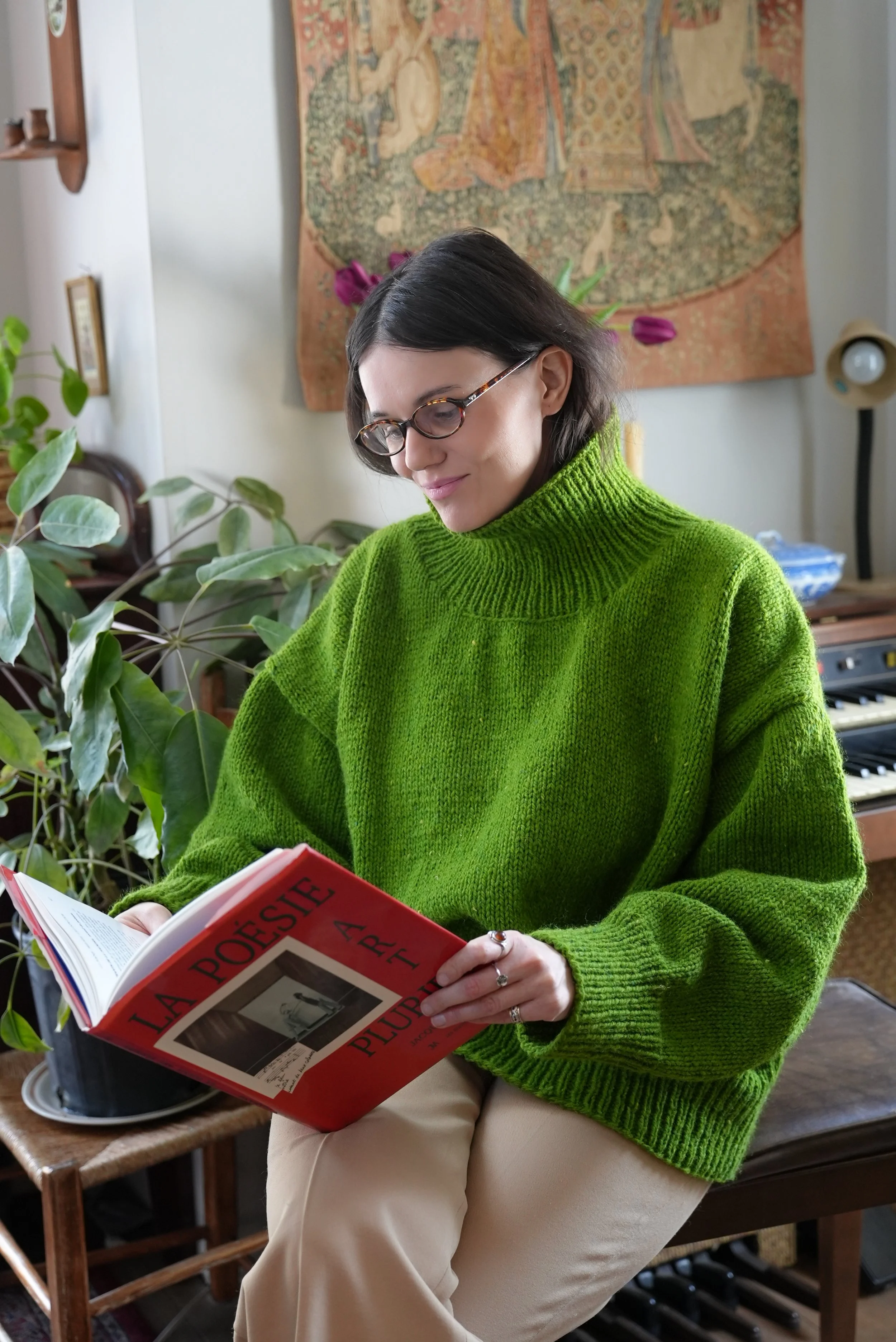
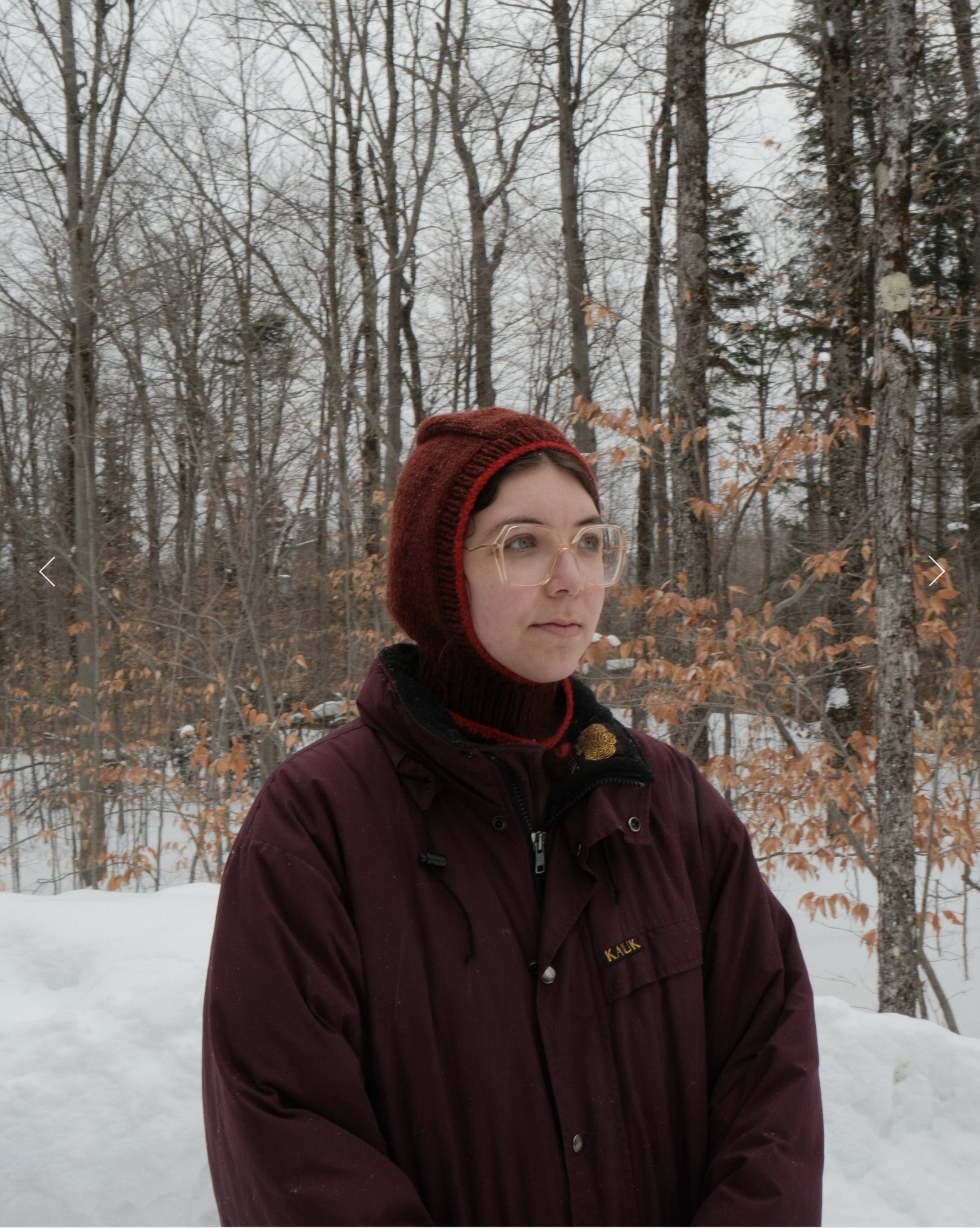
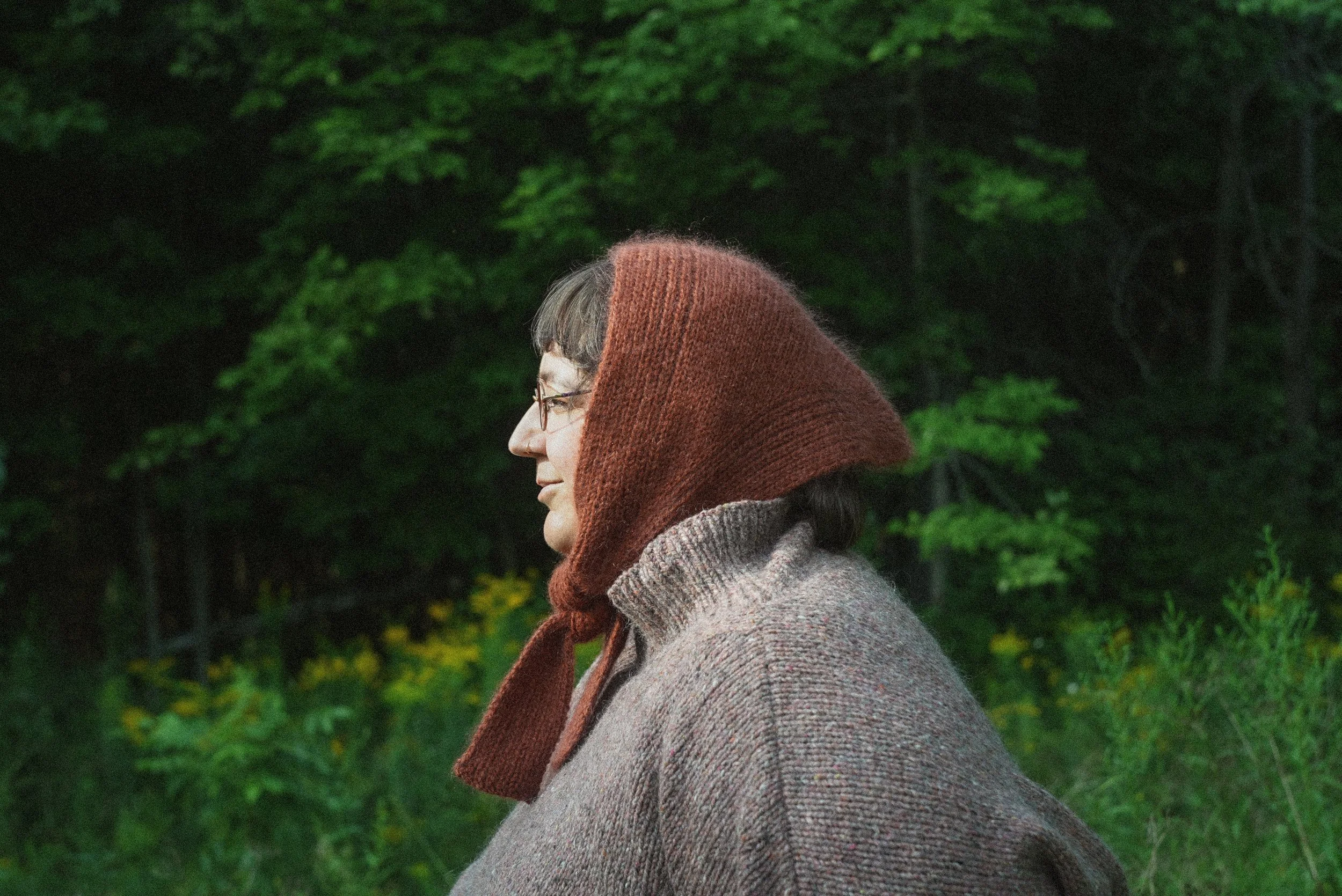
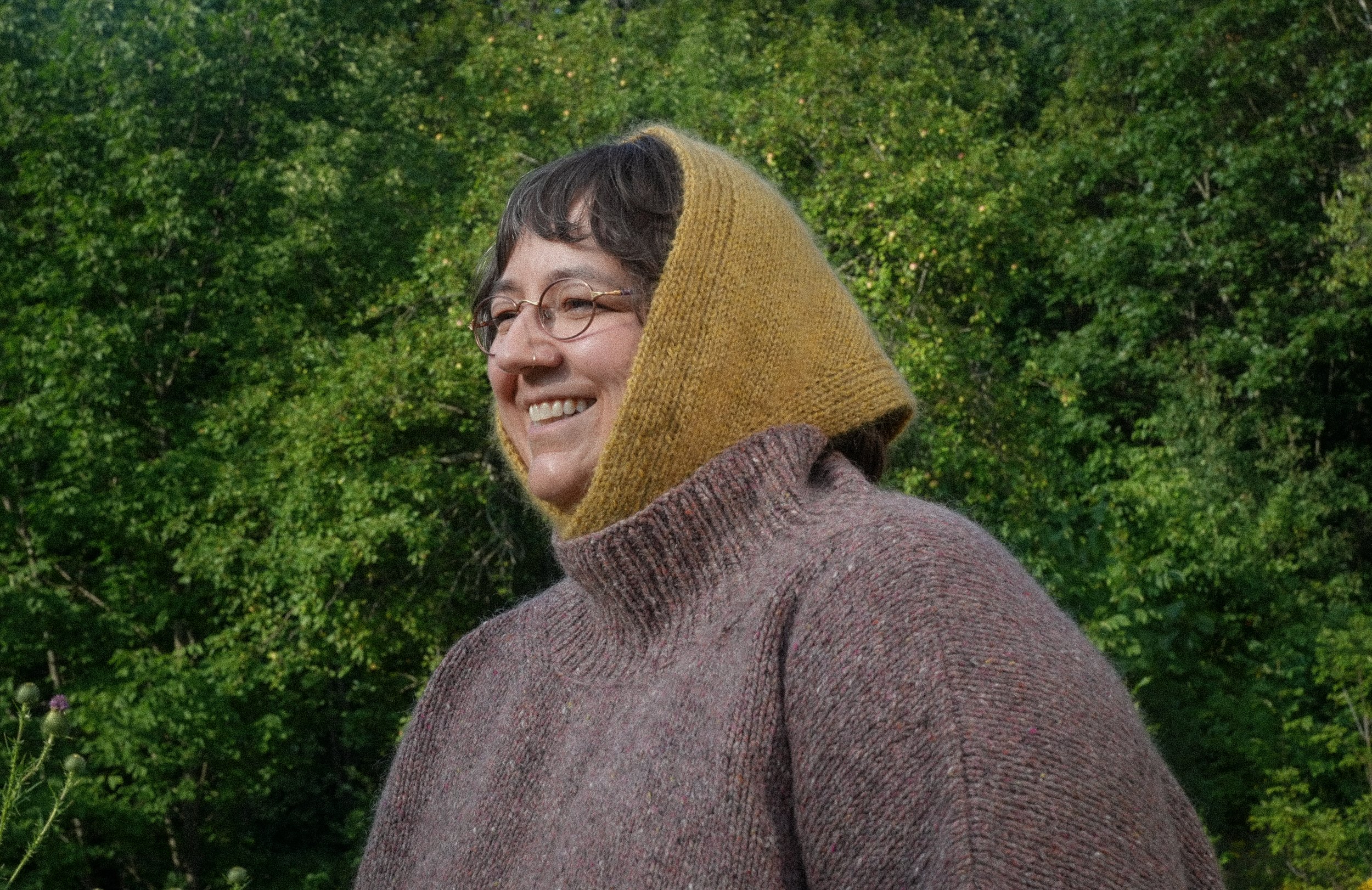
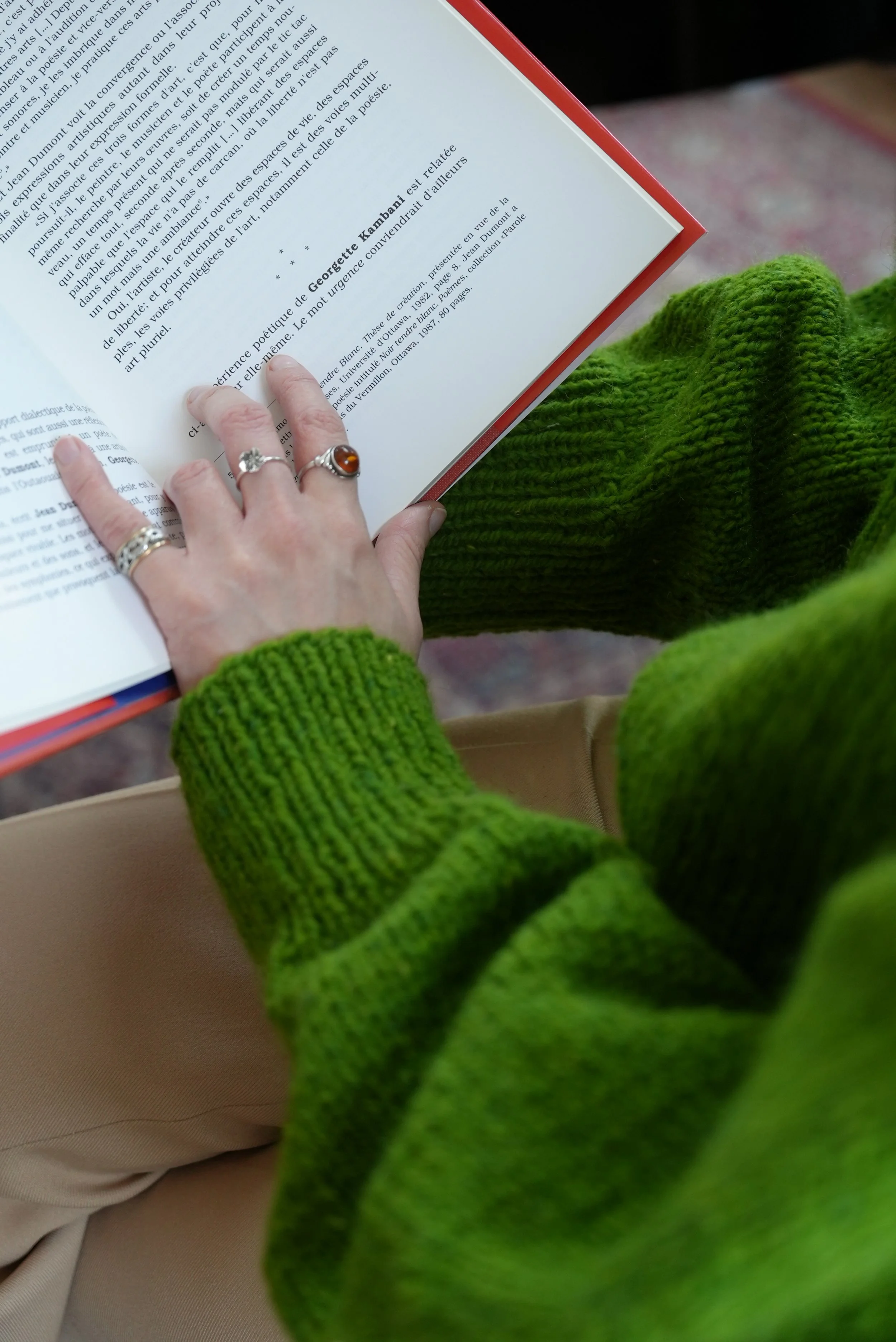
The Marais sweater pattern was born out of a desire to offer a more flexible approach to designing a knitted piece of clothing. Rather than relying on a set gauge, it is built around yours. You’ll be guided through a few simple calculations to determine the size that matches your desired fit, allowing you to use a variety of yarns and achieve the result you are looking for.
Beyond making a sweater, this method aims to make the relationship between gauge, calculations, and the final measurements of a knitted pied of clothing more explicit. By understanding these principles, you will develop a set of guidelines you can apply to future projects, whether adapting a pattern or making more informed design choices.
Take the time to read each step carefully: understanding the process is key to this approach.
This is my first attempt at making intuitive knitting more accessible by providing some guidelines for how I design my own knitted clothing.
MATERIALS
— Worsted-weight yarn*;
The Marais pattern is designed to accommodate different types of yarn. Choose a yarn that suits your taste and budget, but I recommend using a worsted-weight yarn (approximately 200 m / 100 g) to stay within the recommended gauge range.
— Needles A (3.5–5.5 mm), B (3.5–5 mm), and C* (2.75–4.00 mm);
Needles A are the main needles used for the project. Their size is determined by your gauge. Needles B are half a millimeter smaller and are used for ribbing to create neater edges. Needles C are the smallest of the three sizes. They are reserved for the neckline and can also be used for ribbing if you prefer a more fitted finish at the hem and cuffs. Check the project notes to see which needle sizes I used for the different versions.
— Tapestry needle for seaming;
— Gauge: 14 to 18 stitches × 4 inches (10 cm) in stockinette stitch using Needles A.
YARDAGE
Approximately 900 (1000, 1100, 1200, 1300) (1400, 1500, 1600, 1700) 1800, 1900 meters of yarn.
SIZES
1 (2, 3, 4, 5) (6, 7, 8, 9) 10, 11*, corresponding to finished circumferences of
[27–34] ([30–38], [34–42], [38–46], [42–48]) ([46–52], [50–56], [54–60], [58–64]), [62–68], [66–72] inches
or [69–86] ([76–97], [86–107], [97–117], [107–122]) ([117–132], [127–142], [137–152], [147–163]), [157–173], [168–183] centimeters.
The Marais sweater pattern was born out of a desire to offer a more flexible approach to designing a knitted piece of clothing. Rather than relying on a set gauge, it is built around yours. You’ll be guided through a few simple calculations to determine the size that matches your desired fit, allowing you to use a variety of yarns and achieve the result you are looking for.
Beyond making a sweater, this method aims to make the relationship between gauge, calculations, and the final measurements of a knitted pied of clothing more explicit. By understanding these principles, you will develop a set of guidelines you can apply to future projects, whether adapting a pattern or making more informed design choices.
Take the time to read each step carefully: understanding the process is key to this approach.
This is my first attempt at making intuitive knitting more accessible by providing some guidelines for how I design my own knitted clothing.
MATERIALS
— Worsted-weight yarn*;
The Marais pattern is designed to accommodate different types of yarn. Choose a yarn that suits your taste and budget, but I recommend using a worsted-weight yarn (approximately 200 m / 100 g) to stay within the recommended gauge range.
— Needles A (3.5–5.5 mm), B (3.5–5 mm), and C* (2.75–4.00 mm);
Needles A are the main needles used for the project. Their size is determined by your gauge. Needles B are half a millimeter smaller and are used for ribbing to create neater edges. Needles C are the smallest of the three sizes. They are reserved for the neckline and can also be used for ribbing if you prefer a more fitted finish at the hem and cuffs. Check the project notes to see which needle sizes I used for the different versions.
— Tapestry needle for seaming;
— Gauge: 14 to 18 stitches × 4 inches (10 cm) in stockinette stitch using Needles A.
YARDAGE
Approximately 900 (1000, 1100, 1200, 1300) (1400, 1500, 1600, 1700) 1800, 1900 meters of yarn.
SIZES
1 (2, 3, 4, 5) (6, 7, 8, 9) 10, 11*, corresponding to finished circumferences of
[27–34] ([30–38], [34–42], [38–46], [42–48]) ([46–52], [50–56], [54–60], [58–64]), [62–68], [66–72] inches
or [69–86] ([76–97], [86–107], [97–117], [107–122]) ([117–132], [127–142], [137–152], [147–163]), [157–173], [168–183] centimeters.
 Image 1 sur 2
 Image 2 sur 2